
INGOs (International Non-Government Organizations) are voluntary non-government international organizations. They have head office in a developed country such as UK, USA, Japan, and Germany. But their operations and activities extend to too many developing countries. They conduct various activities to uplift and develop the under developed countries. The activities of INGOs consist mainly of:
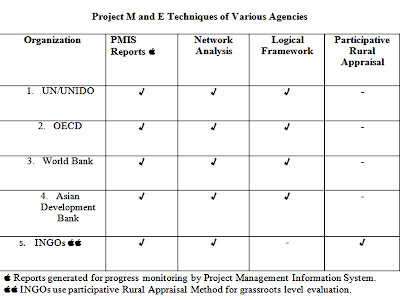
Formal Monitoring by INGOs consists of periodic reports and accounting statements from the project, usually on a monthly or quarterly basis. The actual performance is compared against performance benchmarks in terms of time, budget and quality. Corrective actions are taken for deviations by the INGOs.
Evaluation
- Community Development Activities: They aim at social well-being of target groups. The sectors consist of :
- Health and drinking water
- Education, including literacy and child care
- Agriculture, forestry, irrigation
- Infrastructure development such as bridges, trails, school building.
- Skills development etc.
- Income Generating Activities: They aim to enhance the economic well-being of the target groups. For example, goat rearing.
- Advocacy Activities: They aim to advocate issues like democracy, transparency, environmental protection, rights of women, children and consumers, etc.
- Nepal has more than six dozen INGOs engaged in various at grassroots level. They operate directly or through local NGOs. The Social Welfare Council serves as the focal point for INGO activities.
- INGOs carry out their activities mainly through small projects. A growing number of donors have started to work in partnership with INGOs. A substantial amount of foreign aid (estimates are about Rs. 6 billion) to Nepal flows through the INGOs.
- Monitoring and evaluation is an important aspect of project management by INGOs.
Formal Monitoring by INGOs consists of periodic reports and accounting statements from the project, usually on a monthly or quarterly basis. The actual performance is compared against performance benchmarks in terms of time, budget and quality. Corrective actions are taken for deviations by the INGOs.
Evaluation
- Field level evaluation: It is an on-going process. The project progress is evaluated weekly or monthly by INGO staff through field visits.
- Impact evaluation: This is done for the country programme of the INGOs. It is carried out generally in three to five years.


